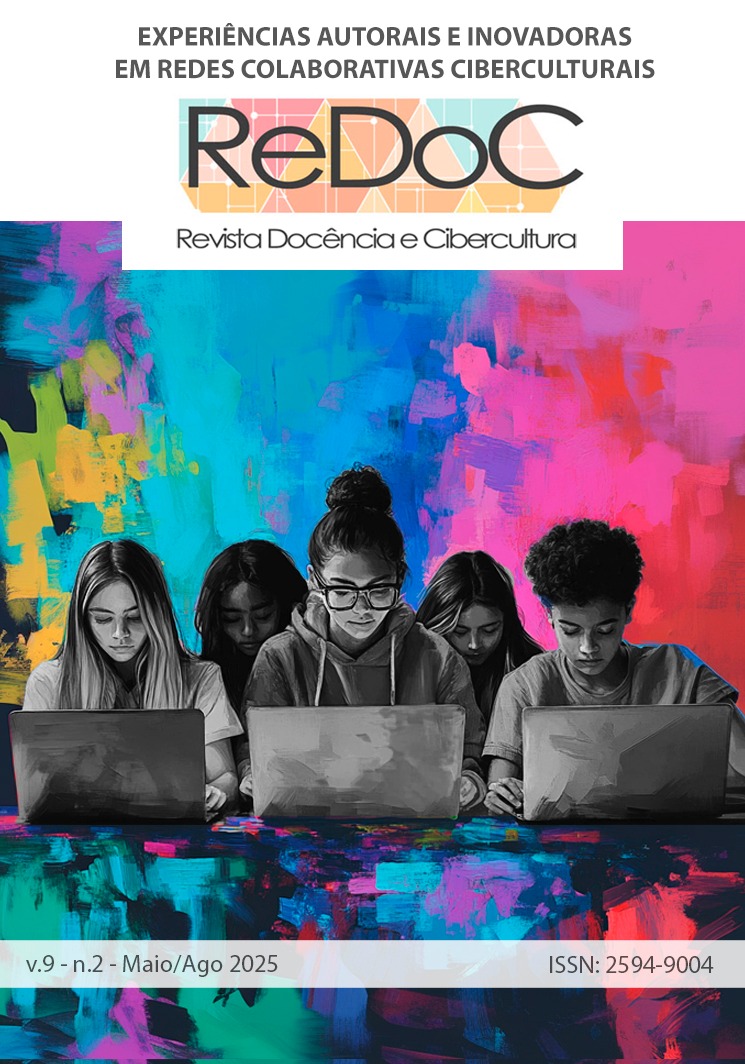
EDUCAÇÃO DIGITAL, FORMAÇÃO E INTELIGÊNCIA ARTIFICIAL GENERATIVA
DOI:
https://doi.org/10.12957/redoc.2025.90564Resumo
Este trabalho aborda as profundas transformações provocadas pela cultura digital na sociedade contemporânea e seu impacto nas relações de construção do conhecimento e na educação. Sobretudo refletindo sobre os recentes atravessamentos que surgem da popularização de soluções de Inteligência Artificial Generativa entre os praticantes da cultura digital. A rápida evolução das tecnologias de informação e comunicação, redes sociais, conexões em rede, e sistemas de inteligência artificial generativa nas últimas décadas colocaram em evidência dilemas no campo da ética. Descritos principalmente na sociologia, filosofia, e autores das ciências da informação, Manuel Castells, Pierre Lévy e Lúcia Santaella, bem como nas considerações da própria Base Nacional Comum Curricular de 2018 e relatórios da Unesco de 2020 e 2022, nos é apresentado um panorama das características de nossa sociedade contemporânea. Esse artigo tem por princípio problematizar em que medida as soluções de Inteligência Artificial Generativa, tencionam dilemas éticos em relação à educação e formação humana?
Para tanto, compõe os objetivos deste trabalho, explorar as possíveis relações entre as soluções de Inteligencia Artificial Generativa com os processos de formação humana, bem como, em que medida se faz necessário lançar mão das concepções de educação midiática e letramento em IA, para um desenvolvimento responsável destes conhecimentos. De abordagem qualitativa, esta pesquisa se apoia em revisão bibliográfica e documental, e explora algumas possibilidades de interação com soluções de IA generativa em contextos de formação dos sujeitos.
Downloads
Publicado
Como Citar
Edição
Seção
Licença
Copyright (c) 2025 Revista Docência e Cibercultura

Este trabalho está licenciado sob uma licença Creative Commons Attribution-NonCommercial-ShareAlike 4.0 International License.
Autores que publicam nesta revista concordam com os seguintes termos:- Autores mantém os direitos autorais e concedem à revista o direito de primeira publicação, com o trabalho simultaneamente licenciado sob a Creative Commons Attribution License que permitindo o compartilhamento do trabalho com reconhecimento da autoria do trabalho e publicação inicial nesta revista.
- Autores têm autorização para assumir contratos adicionais separadamente, para distribuição não-exclusiva da versão do trabalho publicada nesta revista (ex.: publicar em repositório institucional ou como capítulo de livro), com reconhecimento de autoria e publicação inicial nesta revista.
- Autores têm permissão e são estimulados a publicar e distribuir seu trabalho online (ex.: em repositórios institucionais ou na sua página pessoal) a qualquer ponto antes ou durante o processo editorial, já que isso pode gerar alterações produtivas, bem como aumentar o impacto e a citação do trabalho publicado (Veja O Efeito do Acesso Livre).