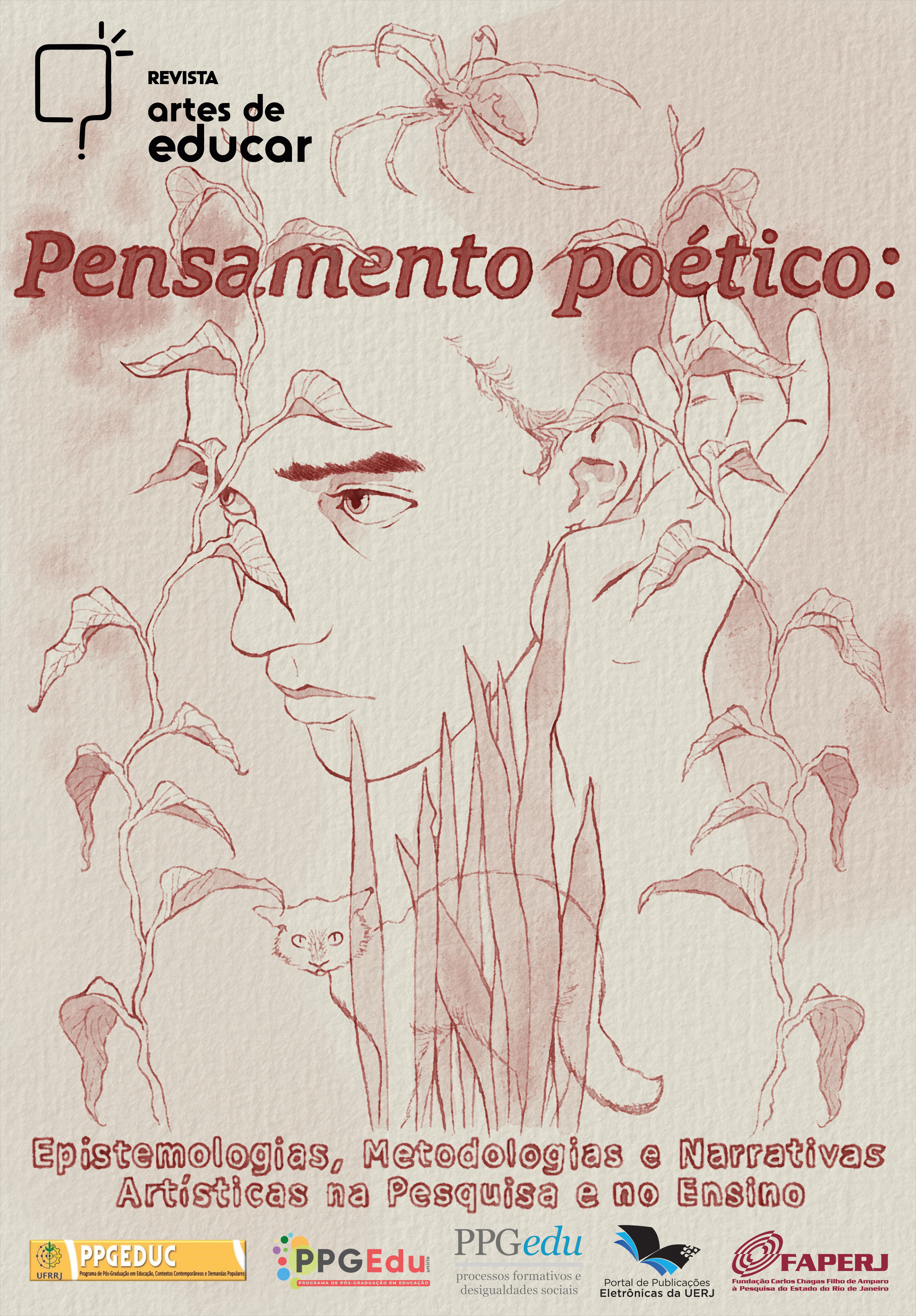
Pensamento poético: epistemologias, metodologias e narrativas artísticas na pesquisa e no ensino
DOI:
https://doi.org/10.12957/riae.2024.88659Palavras-chave:
dossiê temático, pensamento poético, apresentaçãoResumo
Georges Didi-Huberman propõe uma aproximação entre a amortização e a metafísica tradicional. Ele afirma que há uma atitude filosófica que exige a observação de que algo está morto para poder dizer o que é essa coisa: algo como prender uma borboleta a um pedaço de cortiça para estudá-la melhor. No entanto, há outras possibilidades metafísicas que preferem o esvoaçar da vida à promessa da totalidade da morte. “Prefiro não ver a borboleta completamente, prefiro que ela permaneça viva: esta é a minha atitude diante do saber” (Didi-Huberman, p. 62, 2016). A seleção de obras que compõem este livro se baseia nessa mesma atitude: no lugar do anseio pela totalidade, o desejo pela vitalidade. Obras menos ligadas ao “é” das coisas e mais aliadas aos movimentos dos seres vivos, à criação como forma de transitar entre o conhecimento e o afeto.
Downloads
Publicado
Como Citar
Edição
Seção
Licença
Copyright (c) 2024 Priscilla Menezes, Raissa Cortat

Este trabalho está licenciado sob uma licença Creative Commons Attribution-NonCommercial 4.0 International License.
Os autores mantêm os direitos autorais dos seus trabalhos, têm permissão para publicar e distribuir seu trabalho online (ex.: em repositórios institucionais ou na sua página pessoal) a qualquer ponto antes ou durante o processo editorial, já que isso pode gerar alterações produtivas, bem como aumentar o impacto e a citação do trabalho publicado.
A aceitação do texto implica na autorização e exclusividade da Revista Interinstitucional Artes de Educar acerca do direito de primeira publicação, os trabalhos publicados estão simultaneamente licenciados com uma licença Creative Commons Atribuição-Não Comercial 4.0 Internacional