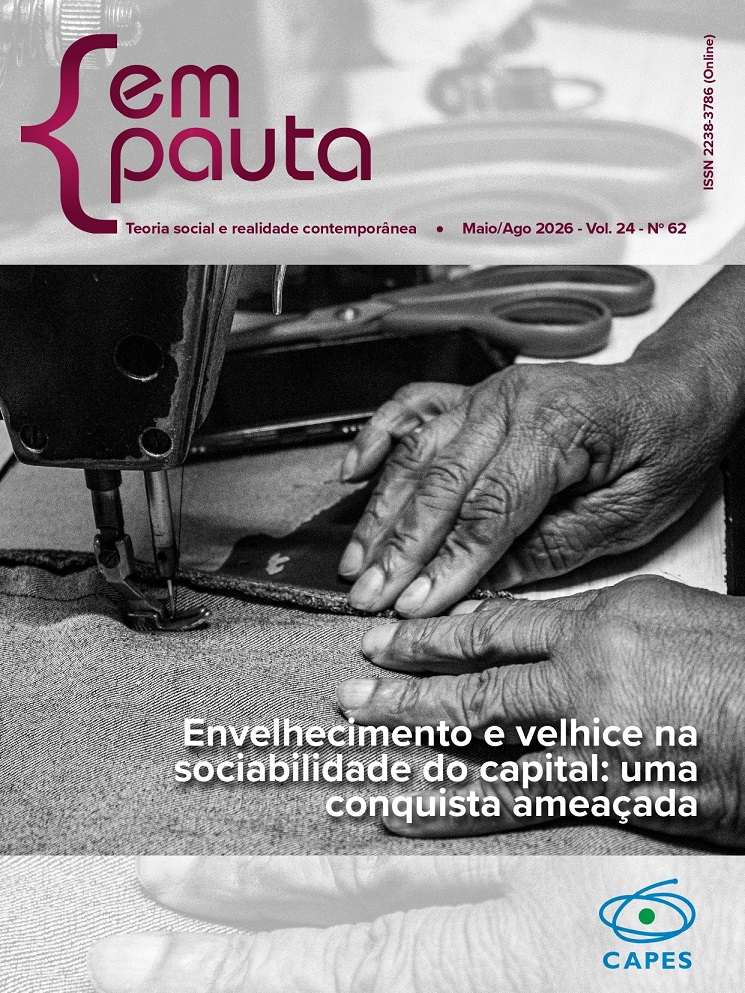
Affirmative Biopolitics and the Reconfiguration of Social Work Practice from NGOs During the Dictatorship in Chile
DOI:
https://doi.org/10.12957/rep.2026.99184Keywords:
Social work, democracy, neoliberal state, affirmative politics, dictatorshipAbstract
The foundational nature of the civil-military dictatorship in Chile (1973-1990) and its repressive actions transformed the rules of social coexistence for the last half-century, profoundly affecting actors within the Popular Unity parties’ coalition, including social workers and their state allies, and class-based organizations. This scenario was characterized by the shrinking of state social action, the dismissal of professionals from their jobs, the repression of class-based organizations, and the institutionalization of the neoliberal model, which reconfigured the practice of social work. In this context, NGOs emerged as alternative spaces for intervention, fostering knowledge production and the development of professional networks, allowing for professional subsistence and advancement outside the state. They facilitated connections with social movements, promoting an affirmative biopolitics oriented toward the sustainability of life, in defense of life against state violence. The local development initiatives implemented worked as micro-spaces of democracy, which, in interaction with the dynamics of social movements, contributed to the reconstruction of the social and political fabric, promoting forms of affirmative biopolitics. This enhanced the recognition and visibility of Social Work in the production of critical knowledge. Following the dictatorship, NGOs became linked to the State and underwent institutionalization within neoliberal policies, resulting in a loss of autonomy and subordination to market forces in the implementation of social policies.
Downloads
Published
How to Cite
Issue
Section
License
Os Direitos Autorais dos artigos publicados na Revista Em Pauta: teoria social e realidade contemporânea pertencem ao(s) seu(s) respectivo(s) autor(es), com os direitos de primeira publicação cedidos à Em Pauta, com o trabalho simultaneamente licenciado sob uma Licença Creative Commons Atribuição 4.0 Internacional, a qual permite o compartilhamento do trabalho com reconhecimento da autoria e publicação inicial nesta revista.
O(s) autor(es) tem/têm autorização para assumir contratos adicionais separadamente, para distribuição não-exclusiva da versão do trabalho publicada nesta revista (ex.: publicar em repositório institucional ou como capítulo de livro), com reconhecimento de autoria e publicação inicial nesta revista.
Autores têm permissão e são estimulados a publicar e distribuir seu trabalho online (ex.: em repositórios institucionais ou na sua página pessoal) a qualquer ponto antes ou durante o processo editorial, já que isso pode gerar alterações produtivas, bem como aumentar o impacto e a citação do trabalho publicado.

A Revista Em Pauta: Teoria Social e Realidade Contemporânea está licenciada com uma Licença Creative Commons Atribuição 4.0 Internacional.

A Revista Em Pauta está cadastrada no Diretório de Políticas de Acesso Aberto das Revistas Científicas Brasileiras (DIADORIM), com selo Verde.

