
JOÃOZINHO DA GOMÉIA E O INSTITUTO HISTÓRICO DA CMDC: ACERVO, MEMÓRIAS E PATRIMÔNIO.
DOI:
https://doi.org/10.12957/periferia.2020.55035Keywords:
Instituto Histórico, Goméia, Preservação, Memória, Patrimônio.Abstract
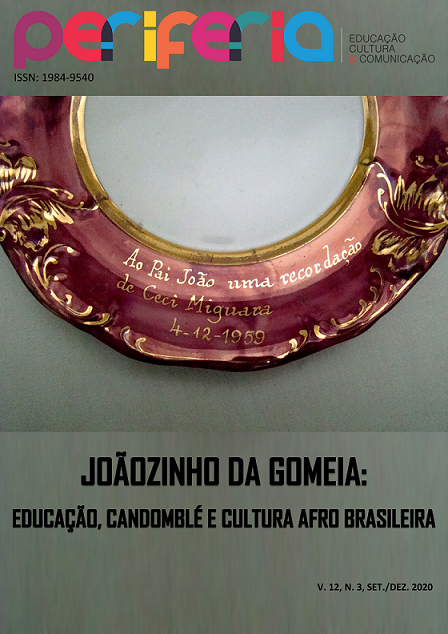
O Instituto Histórico da Câmara Municipal de Duque de Caxias foi fundado em 1973. Desde então, tem se destacado na guarda do acervo histórico de Duque de Caxias e da Baixada Fluminense. Entre os mais de setenta mil itens documentais - reproduções fotográficas, documentos originais, livros e jornais -, o acervo do babalorixá Joãozinho da Goméia destaca-se entre publicações bibliográficas, reportagens de jornais, vestimentas e artefatos religiosos. A Revista Pilares da História, publicação editada pelo Instituto Histórico desde o ano 2002, conta com vários artigos sobre Joãozinho da Goméia, bem como o salão de exposições já contou com diferentes mostras artísticas e históricas sobre o mais famoso sacerdote das religiões afro-brasileiras da Baixada Fluminense. O presente artigo tem por objetivos identificar, descrever e problematizar o acervo guardado no Instituto Histórico, bem como os seus diferentes usos realizados pelos pesquisadores que buscam o IHCMDC para investigar sobre a trajetória e os diferentes aspectos da vida de Joãozinho da Goméia.
Downloads
Published
How to Cite
Issue
Section
License
Authors who publish in this journal agree to the following terms:
a. Authors retain the copyright and grant the journal the right of first publication, with the work simultaneously licensed under the Creative Commons Attribution License which allows the sharing of the work with acknowledgment of the authorship of the work and initial publication in this journal.
b. Authors are authorized to take additional contracts separately, for non-exclusive distribution of the version of the work published in this journal (eg, publish in institutional repository or as a book chapter), with acknowledgment of authorship and initial publication in this journal.
Authors are allowed and encouraged to publish and distribute their work online (eg in institutional repositories or on their personal page) at any point before or during the editorial process, as this can generate productive changes as well as increase the impact and the citation of the published work (See The Effect of Free Access).

