Sobre a Revista
Foco e Escopo
Periferia é um periódico científico, voltado para a publicação de textos inéditos na área de Educação. A revista publica artigos, resenhas e entrevistas, priorizando o campo da Educação, bem como produções que estabeleçam um diálogo deste campo com a Comunicação e a Cultura, contando com a colaboração de pesquisadores nacionais e estrangeiros.
No que diz respeito à linha da publicação, o termo periferia designa não apenas a localização geográfica de certas regiões e os aspectos sociais e econômicos que daí decorrem, mas também os fenômenos sociais e as manifestações culturais que – por seu caráter experimental, inovador ou alternativo se situam à margem das tendências estabelecidas, apontando para novos cenários, novos modos de apropriação e produção intelectual.
Processo de Avaliação pelo Pares
Periferia realiza avaliação cega por dois pareceristas. A identidade dos pareceristas permanece anônima. Os trabalhos enviados serão apreciados de acordo com o seguinte processo:
1 - O material recebido passa por uma primeira avaliação por parte da Comissão Editorial para verificar a adequação às normas e à linha editorial. Caso não preencha os requisitos acima, o material é recusado. Se for o caso, após atender às reformulações requisitadas, deve-se fazer nova submissão.
2 - Caso esteja em conformidade com as normas da etapa inicial, é encaminhado a 2 pareceristas para avaliação às cegas. É mantido o anonimato do autor quando o texto é enviado aos pareceristas. Após avaliação dos pareceristas, a Comissão Editorial consolida a decisão final com base nos seguintes critérios: aprovado para publicação na revista; realizar correções obrigatórias; recusado para publicação.
A aprovação ou recusa de cada artigo depende da disponibilidade e agilidade do Conselho Editorial e dos pareceristas ad hoc, levando em média 180 dias.
3 - Em caso de aprovação do texto, os autores terão o prazo de 15 dias para realizar adequações. Se estiverem todas em acordo com os pareceres emitidos, viabilizarão o envio do texto para a editoração e publicação.
Periodicidade e Política de Acesso Livre
A Revista Periferia adota o Fluxo Contínuo para publicação e tem como compromisso a democratização mundial do conhecimento científico, oferecendo gratuitamente ao público acesso livre imediato ao seu conteúdo.
Política de Acesso Livre
A revista Periferia adota a política de acesso aberto conforme a definição estabelecida pelo Directory of Open Access Journals (DOAJ). Todo o conteúdo publicado está disponível gratuitamente, de forma imediata, sem custos para os leitores ou instituições. Não há embargos ou barreiras de acesso, assegurando ampla disseminação do conhecimento científico.
Os autores mantêm os direitos autorais de seus trabalhos e concedem à revista o direito de primeira publicação. Os artigos são licenciados sob a licença Creative Commons Atribuição 4.0 Internacional (CC BY 4.0), a qual permite que qualquer usuário leia, baixe, copie, distribua, imprima, pesquise, indexe, ou utilize o conteúdo publicado para qualquer propósito legal, inclusive para fins comerciais, desde que devidamente citada a autoria original. Essa política visa promover a circulação do conhecimento acadêmico e estimular práticas editoriais alinhadas aos princípios da ciência aberta.
Periodicidade
A Revista Periferia adota o Fluxo Contínuo para publicação e tem como compromisso a democratização mundial do conhecimento científico, oferecendo gratuitamente ao público acesso livre imediato ao seu conteúdo.
Indexadores
- BASE - Bielefeld Academic Search Engine
- Diadorim - Diretório de Políticas Editoriais das Revistas Científicas Brasileiras
- DOAJ - Directory of Open Access Journals
- EDUBASE
- EZB - Electronic Journals Library
- Google Acadêmico
- Latindex
- Iresie
- Livre - Revistas de Livre Acesso
- PKP - Public Knowledge Project
- REDALYC
- REDIB - Red Iberoamericana de Innovación y Conocimiento Científico
- ROAD
- SCILI
- SciELO
- SCOPUS (Elsevier)
- SUMÁRIOS.ORG
- Web of Science

Este obra está licenciado com uma Licença Creative Commons Atribuição 4.0 Brasil
Ética da Publicação e Declaração sobre más práticas
(baseada nas recomendações da Elsevier e melhores práticas, além das regras da comissão de ética da Universidade do Estado do Rio de Janeiro, UERJ: https://coep.pr2.uerj.br/)
A Revista Periferia se compromete com a garantia da ética e qualidade dos artigos publicados. Espera-se de todas as partes envolvidas na publicação – autores, editores e pareceristas – o comportamento ético de acordo com os valores do campo científico.
Aos Autores: devem apresentar uma discussão objetiva sobre o significado do trabalho de pesquisa, bem como detalhes suficientes e referências que permitam a replicação dos estudos. Afirmações dotadas de fraude ou imprecisas constituem comportamento antiético e são inaceitáveis. Os autores devem garantir que seu trabalho é inteiramente original, e que as citações de trabalhos de outros pares são adequadamente apresentadas. Plágio em todas as suas formas ou submeter simultaneamente o mesmo manuscrito para mais de uma revista constitui comportamento antiético inaceitável. O autor responsável pela submissão deve garantir que há aceitação completa de todos os coautores sobre a versão final do manuscrito e de sua submissão para publicação.
Aos Editores: devem avaliar manuscritos exclusivamente a partir de seu mérito acadêmico. Um editor não deve utilizar informações não publicadas em sua própria pesquisa sem o consentimento expresso do autor. Editores devem tomar medidas razoáveis e responsivas no caso de reclamações em relação a um manuscrito submetido ou publicado.
Aos Pareceristas: cada manuscrito recebido para avaliação deve ser tratado como documento confidencial. Informação privilegiada ou ideias obtidas por meio de revisão por pares (peer review) devem ser mantidas confidenciais e não podem ser utilizadas de forma a obter vantagem pessoal. Avaliações devem ser conduzidas de forma objetiva, e observações devem ser formuladas claramente com argumentos que as sustentem, de forma que os autores possam utilizá-las para aprimorar seus artigos. Se um revisor selecionado se sentir não qualificado para realizar a avaliação ou souber que não poderá realizá-la, deve comunicar prontamente ao editor. Os avaliadores não devem aceitar analisar manuscritos com os quais eles possuam qualquer conflito de interesses que resultem de relações competitivas, colaborativas, ou relações de outro caráter.
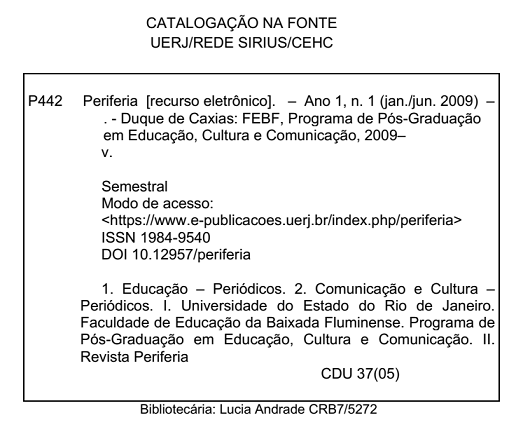
Catalogação na Publicação